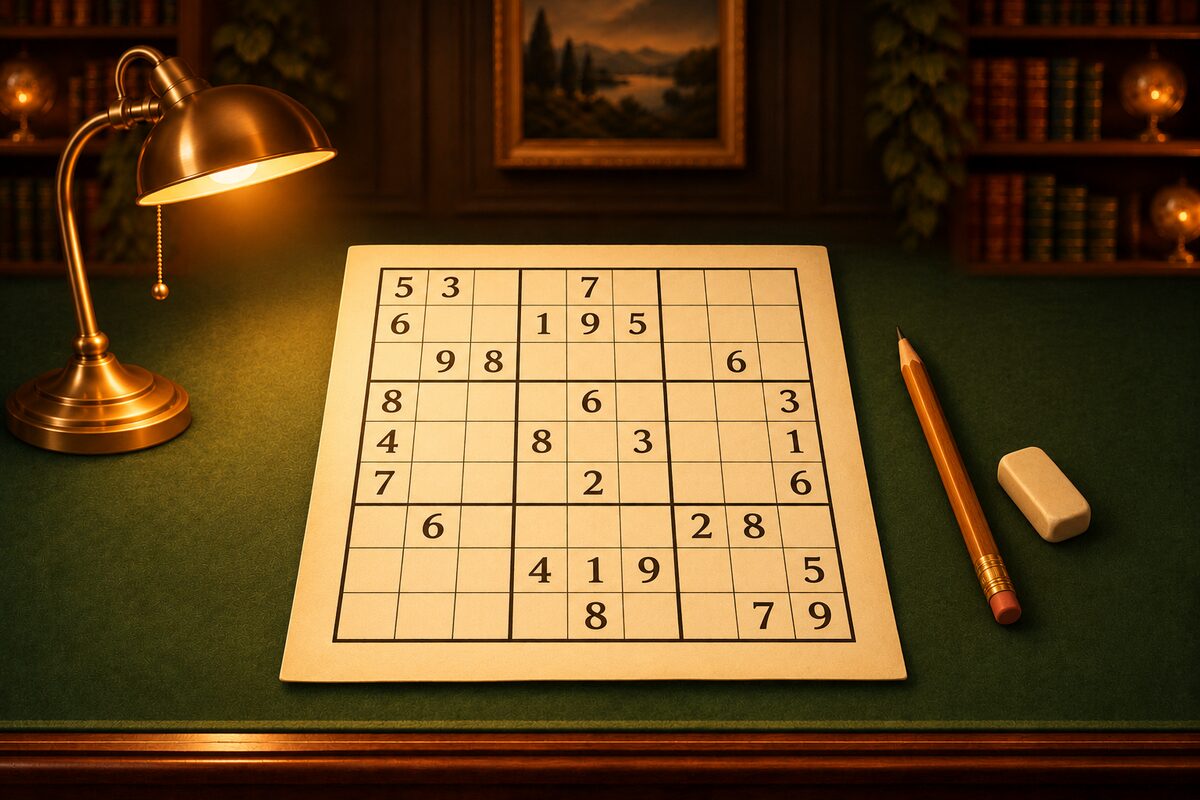
“Sudoku” and “Number Place” are the same puzzle. You fill in the empty squares so that every column, every row, and every bold box holds 1 to 9 exactly once. There is no difference in the rules.
Why There Are Two Names
“Sudoku” is a registered trademark of Nikoli, a Japanese puzzle publisher. For that reason, books and apps from other publishers in Japan often put out the same puzzle under the name “Number Place”, or its shortened form ”Nanpure“.
- Sudoku: the name given by Nikoli.
- Number Place (shortened in Japan to “Nanpure”): the English name, and the shortened form used in Japan.
The NumberPlace app uses this name, too.
Where “Sudoku” Comes From
“Sudoku” is said to be a shortened form of the name Nikoli gave this puzzle, “Sūji wa dokushin ni kagiru”, meaning “digits must be single”. It expresses the rule that “every digit appears only once (alone) in a unit”.
Where “Number Place” and “Nanpure” Come From
“Nanpure” is a shortened form of the English Number Place. This puzzle is said to come from one that appeared under the name “Number Place” in an American puzzle magazine in the late 1970s. It was later introduced to Japan, and Nikoli spread it under the name “Sudoku”.
“Sudoku” in English
This puzzle became hugely popular overseas in the mid-2000s. At that time the Japanese name was used as it was, and in English too it came to be called Sudoku. A puzzle born in America was named in Japan, and spread around the world under its Japanese name (The History and Origin of Sudoku).
In English, the name Number Place is still in use today, too.
Which Should You Call It?
In everyday conversation, either name works. Because the rules are the same, “how to solve Sudoku” and “how to solve Number Place” are the same thing.
When you look for a book or an app, searching with both names makes it easier to find. The meaning of Sudoku and Number Place and what they are called in other languages are also covered in What Is Sudoku (Number Place)?.