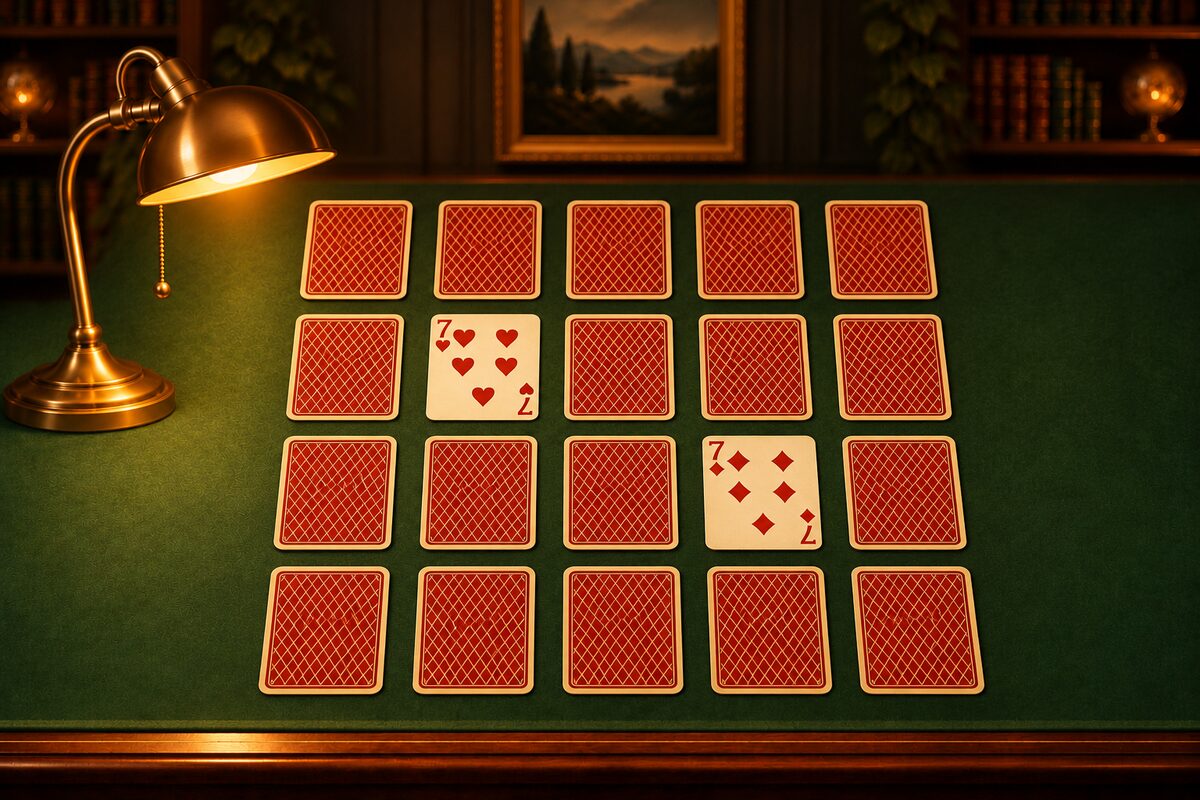
Memory, called “shinkei-suijaku” in Japan, is played all over the world. In English, there isn’t one fixed name for it. There are several.
The Main Names in English
| Name | Meaning |
|---|---|
| Concentration | Focus |
| Memory | The ability to remember |
| Pairs | Sets of two |
| Pelmanism | (A proper name) |
- Concentration: In English-speaking countries, this is a common name for the playing-card version.
- Memory: Used widely, including for picture-matching card games for children.
- Pairs: It shows that the goal is to collect sets of two cards.
- Pelmanism: A name used in the UK and elsewhere. It is said to come from the name of a memory-training course.
The reason the Japanese name is “shinkei-suijaku” (literally “nervous exhaustion”) is explained in Where the Name Shinkei-suijaku Comes From.
What Is a Memory Game?
“Memory game” is a general name for games that are mostly about remembering. Flipping face-down cards to find pairs, as in Memory, is the best-known example. Many versions use cards with pictures of animals or fruit instead of playing cards, and they are sold as toys for young children.
The app’s name on an English-language screen is also “Memory Cards.” Besides playing cards, it has “Pictures” you can play with, such as sweets and animals.
Phrases for Playing in English
Here are some short phrases you can use when you play Memory in English.
- Let’s play Concentration. (Let’s play Memory.)
- It’s your turn.
- Turn over two cards.
- It’s a match!
- No match.
- Go again. (You can flip again.)
It’s good English practice, so it can be fun to try playing with family or friends in English only. You can check the rules in The Rules of Memory.