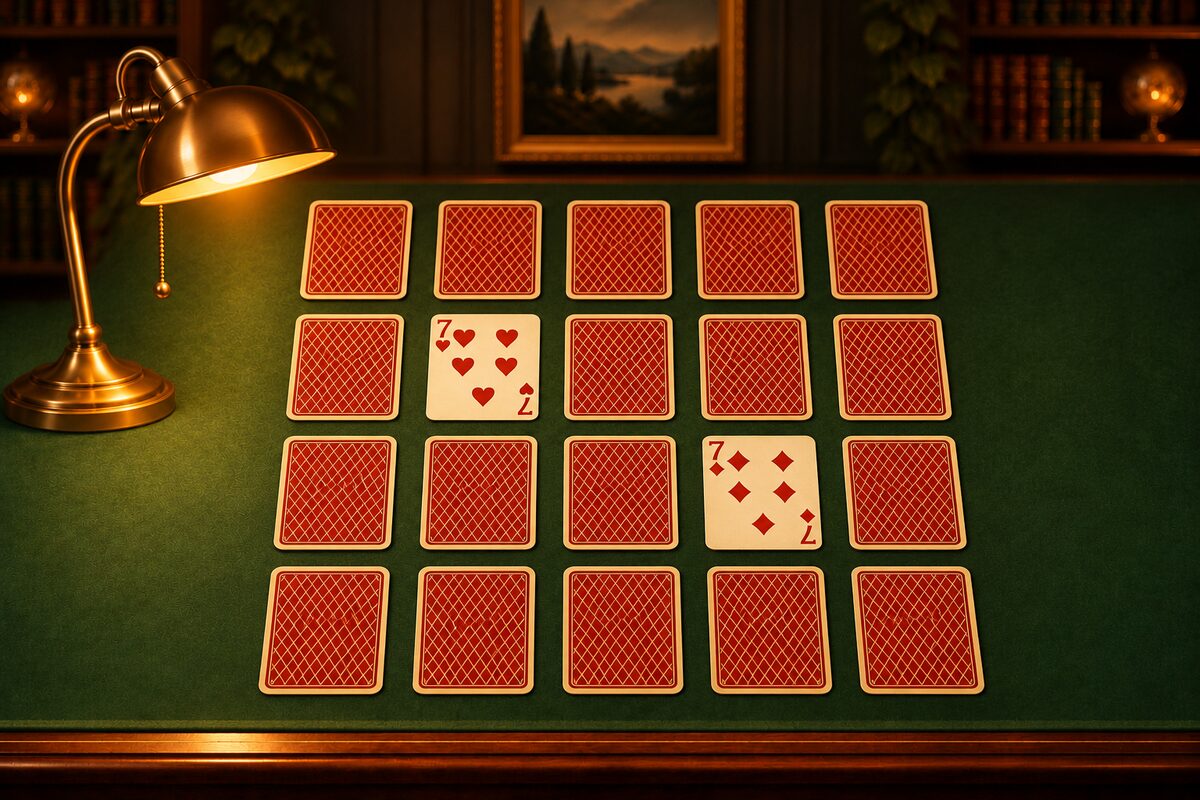
Memory is a card game played all over the world, but we don’t know much about how it started. Here is what we do know about its history, and what we don’t.
We Don’t Know Who Invented It
Nobody knows who invented Memory or when. The rules are very simple, and you can play right away with a deck of cards, so it’s thought to have grown up naturally in many places.
Since no organization has ever set official rules, small details, such as whether you can keep flipping after a match, still differ by region and by family (Fun House Rules).
Names Around the World
In English, it’s called Concentration, Memory, Pairs, and other names. In the UK and elsewhere it’s also called Pelmanism, a name said to come from a memory-training course (What Is Memory Called?). Every one of these names describes what the game is about: remembering and making pairs.
Picture-Matching Toys and TV Shows
In the 20th century, children’s “memory games,” played with picture cards instead of playing cards, came to be sold widely. Even now, matching cards with pictures of animals and vehicles are a classic toy (Memory Beyond Playing Cards).
In the United States, a TV quiz show based on this game is said to have aired for many years.
“Shinkei-suijaku” in Japan
In Japan, the playing-card version of Memory is a game everyone knows, from children to adults. It isn’t clear since when the name “shinkei-suijaku” (literally “nervous exhaustion”) has been used. What people say about where the name comes from is gathered in Where the Name Shinkei-suijaku Comes From.
Memory on Computers and Phones
Memory is popular on computers and phones, too. You don’t have to lay out and put away the cards, and the game counts your tries and time for you, so it’s easy to challenge your own record alone.
The Memory Cards app is also played alone with 20 cards, where you challenge yourself on tries, time, and misses (How to Use the Memory Cards App).