 Chess Board
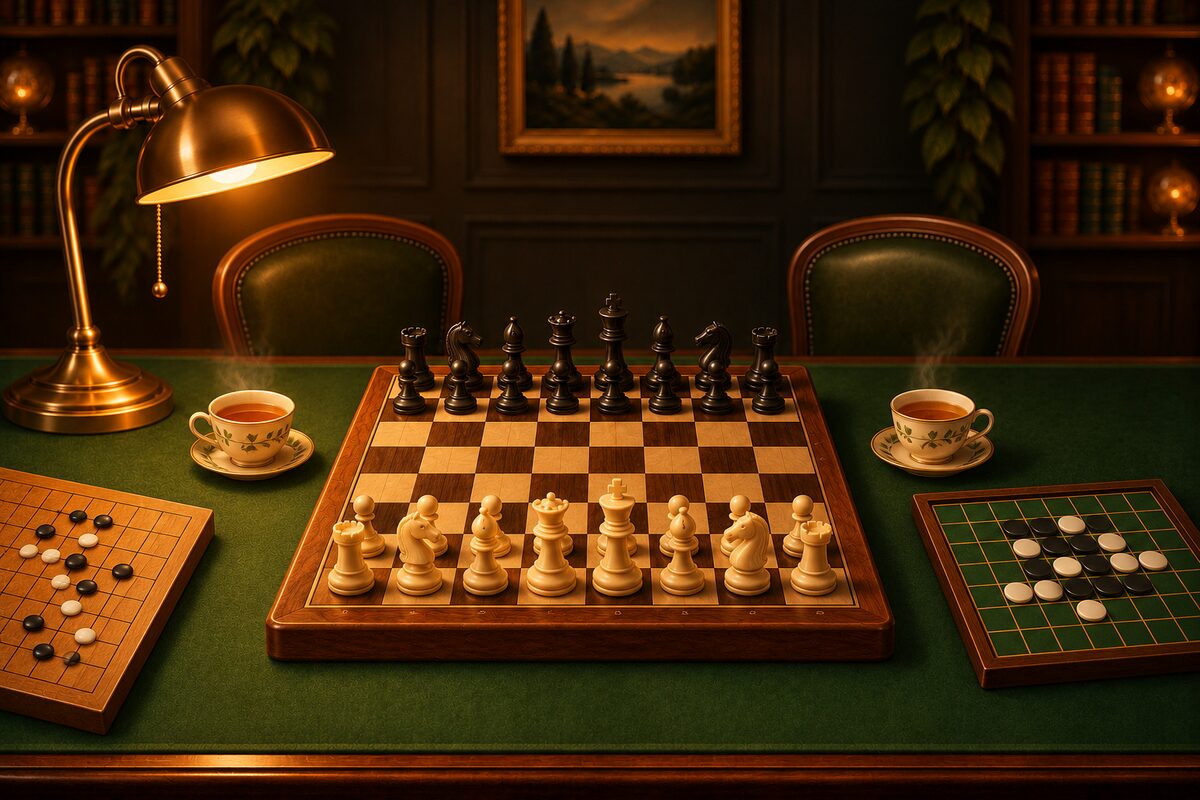
Many board games were made for two people to play facing each other. Board games that people have kept playing for hundreds or thousands of years are appealing because their rules are short but they have great depth.
Classic Two-Player Games at a Glance
| Game | Luck | Ease of learning the rules | Time per game |
|---|---|---|---|
| Gomoku | None | ◎ | 5–15 min |
| Reversi | None | ◎ | 10–20 min |
| Mancala | None | ○ | 10–20 min |
| Backgammon | Yes | ○ | 15–30 min |
| Chess | None | △ | 20–60 min |
| Shogi | None | △ | 30–60 min |
| Go | None | ○ | 30–90 min |
If You Want to Start Playing Right Away
Gomoku
On a Go board or graph paper, two players take turns placing stones (or marks), and whoever gets five in a row, across, down, or diagonally, wins. With paper and pencil, you can play anywhere. The player who goes first has the advantage, so it’s a good idea to take turns going first.
Reversi
On an 8×8 board, when you trap your opponent’s stones between your own, the trapped stones change to your color. Whoever has more stones at the end wins. You can learn the rules in a minute, but there’s real strategy, like how important it is to take the corners.
Mancala
You scoop up the stones in a pit and drop them one at a time into the next pits. The fun is in counting and figuring out where your last stone will land.
If You Want to Enjoy Some Luck Too
Backgammon
You roll two dice to move your 15 pieces, and whoever bears off all of their pieces first wins. There’s luck from the dice, but how you move which pieces makes a difference, so beginners sometimes beat experienced players.
If You Want to Build Your Skills Over Time
Chess
You move six kinds of pieces, and whoever checkmates the opponent’s king wins. People play it all over the world, so once you learn the rules, you can play with people from any country. We explain the rules in The Rules of Chess and how the pieces move in How Chess Pieces Move and What They’re Called.
Shogi
A cousin of chess from Japan, but because you can use the pieces you capture as your own, the game can turn around right up to the end.
Go
Players take turns placing white and black stones and compare how much territory they’ve surrounded. The official board is 19×19, but on a small 9×9 board you can play in a short time.
How to Choose
- If your opponent is a beginner: Gomoku or reversi. Explaining them takes no time.
- If there’s a gap in age or skill: Backgammon. Because there’s luck, anyone has a chance to win.
- If you want something to enjoy for a long time: Chess or Go. Getting better is part of the fun.
We also introduce two-player games of mind games and deduction in Deduction and Number-Guessing Games.
You Can Play Even Without a Board
Even without a chess board and pieces, you can use a phone or tablet as the board. The Chess Board app is made for two people to play around one device, and it’s free to play on iPhone and Android (ads are shown). You can play without an internet connection, and you can keep the games you play as game records. We explain how to play with two players in Playing Chess With Two Players.