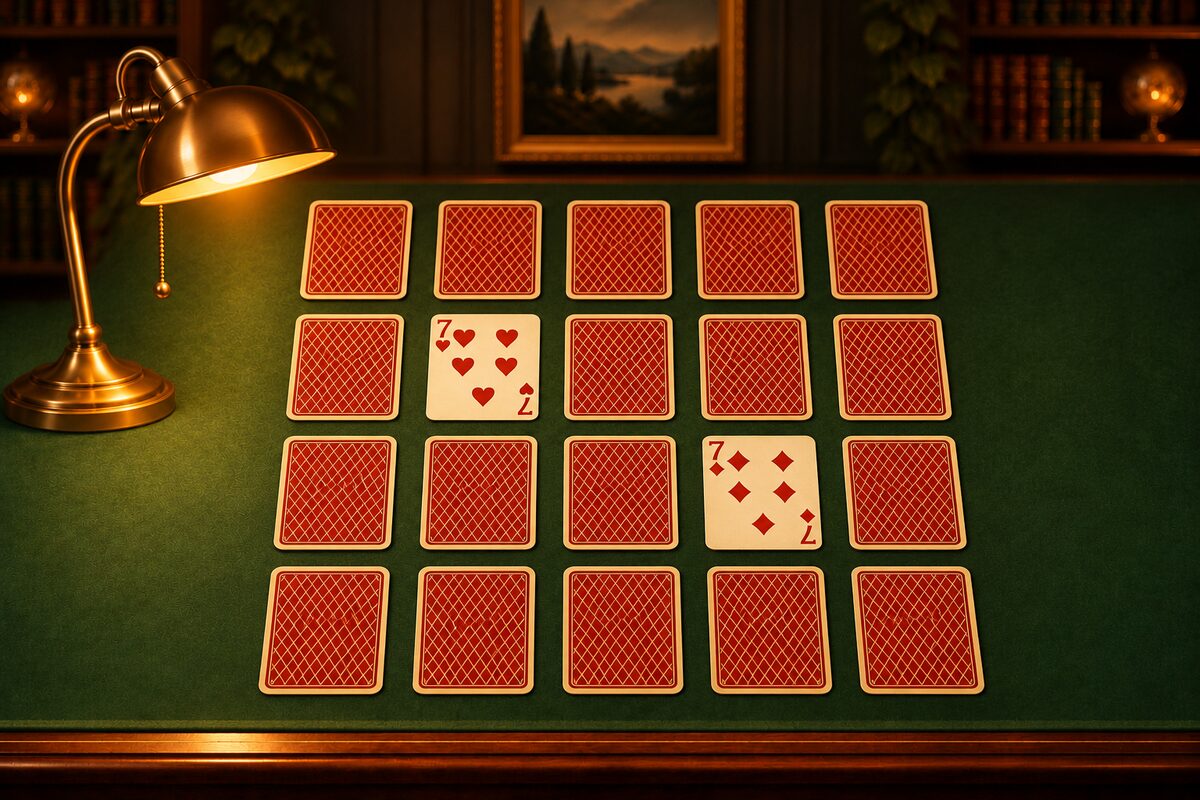
Memory has simple rules, so it’s a game the whole family can play. People sometimes ask, “What age can you start?” but there is no set age. Every child can do different things. Here are some ways to make the game fun even with small children.
Signs They’re Ready
Instead of age, look at whether they can do things like these.
- Compare two cards and tell whether they are the same
- Wait for their turn and flip cards in turns
- Put a flipped card back in its original spot, face down
Even if a child can’t read the numbers on playing cards, they can play with picture cards just by finding two of the same picture.
Use Fewer Cards
Using all 52 cards takes a long time, even for adults. When playing with children, use fewer cards.
- Start with about 6 pairs (12 cards). For example, use two each of the cards from A to 6.
- As they get used to it, move up to 8 pairs, then 10.
- Laying the cards out neatly in rows and columns makes positions easier to remember.
The board below is set up to play with 6 pairs, or 12 cards.
The Memory Cards app uses 10 pairs, or 20 cards. Once you’re used to 12, try the app too.
Tips for Playing With Children
- Say the flipped card out loud: Saying “That’s a 3” or “This one is the K” as you flip helps children remember too.
- Give a handicap: For example, adults get one flip per turn, but children get another flip when they make a match. This keeps the game evenly matched.
- Play together: You can also skip deciding a winner and work together to get the number of tries as low as possible.
- Keep it short: The right number of cards is one that lets you finish while their attention lasts.
A Way to Learn Numbers and Pictures
Playing with cards is also a chance to get familiar with numbers and suit names. You can learn as you play, like A is 1, and J, Q, and K are the court cards. Still, the most important thing is to have fun. Don’t push them to learn, and just enjoy it together.
The rules are in The Rules of Memory, and hints for remembering are in Tips for Memory.