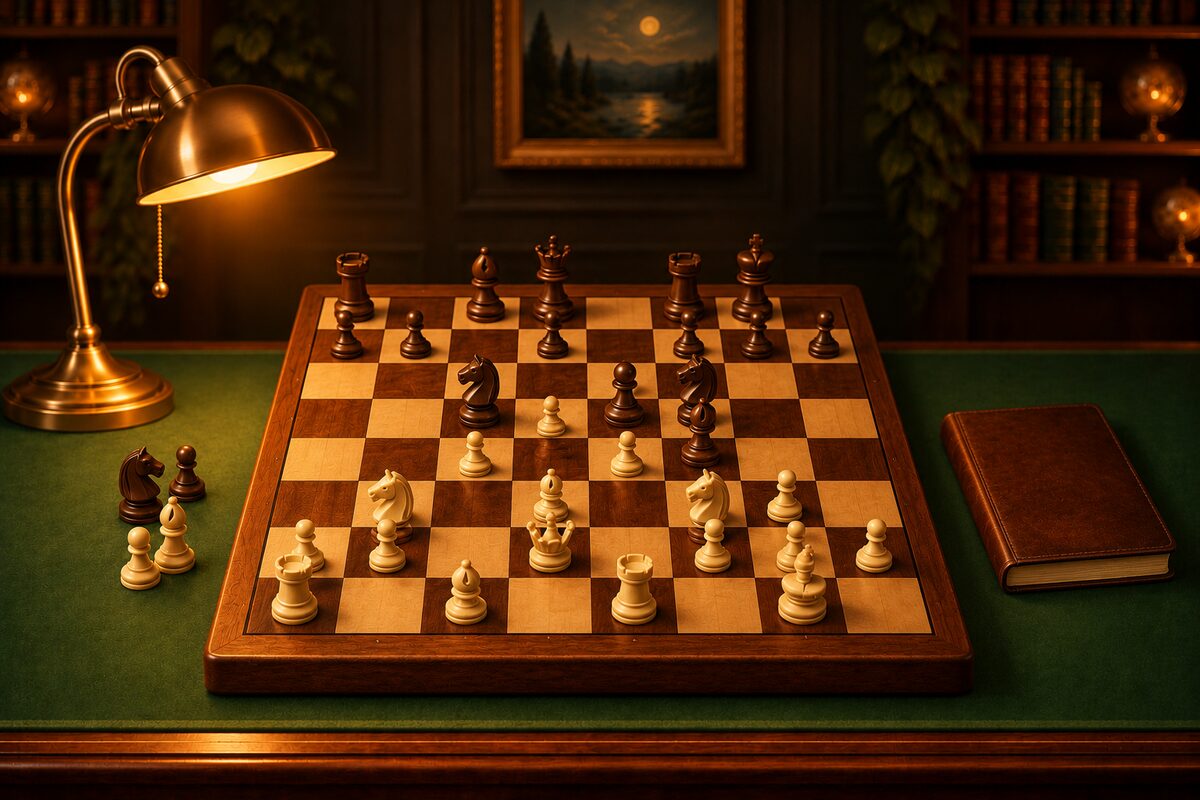
In chess, White makes the first move. From the starting position, White has exactly 20 possible moves.
How to Count the 20
In the starting position, only the pawns and the knights can move. Every other piece is hemmed in by its own pieces.
- Pawns: Each of the 8 pawns can go one or two squares, so 8 × 2 = 16 moves.
- Knights: Each of the 2 knights can jump to 2 squares, so 2 × 2 = 4 moves.
That makes 16 + 4 = 20 moves in all.
Both a pawn and a knight can go to a3, c3, f3, and h3, so there are 16 squares but 20 moves.
Black Also Has 20 Replies
Whatever White plays, Black’s pieces can’t yet reach White’s pieces, so Black also has 20 replies. With 20 replies for each of White’s 20 moves, the positions after one move each number 20 × 20 = 400. All 400 of these positions look different.
After that, pieces come out, more moves become available, and captures and checks appear. The numbers from move 2 on are covered in How Many Chess Positions Are There?.
Popular First Moves
Among the 20, the ones played most often are those that aim at the center of the board.
- e4: The pawn in front of the king moves two squares. It takes the center and opens lines for the queen and bishop.
- d4: The pawn in front of the queen moves two squares. Along with e4, it is played very often.
- c4: Aims at the center from the side.
- Nf3: Brings out a knight to watch the center. It also helps prepare kingside castling.
On the other hand, a3 and h3, which move an edge pawn, and Na3 and Nh3, which put a knight on the edge, are played less often because they don’t affect the center. Under the rules you can play any of them, so when you’re starting out it can be fun to try them all.
Is Moving First an Advantage?
White, who moves first, is said to win slightly more often. The gap isn’t large, though, and between skilled players many games end in draws.
In the App
In the Chess Board app, selecting a piece shows the squares it can move to. If you select a pawn or a knight in the starting position, the squares in the diagram above are marked.
How openings go is covered in Chess Openings, and how the pieces move in How Chess Pieces Move and What They’re Called.